

Fitpro OG, Zac Perna, shares the sause...
TL;DR
Zac Perna shared a practical, no-fluff breakdown of how fitness professionals can attract attention, convert followers into leads, and deliver results using a clear content and lead generation system. Drawing on eight years in social media and six years working alongside MacroActive creators, Zac outlined the exact frameworks he used to build a seven-figure online coaching business.
Attendees learned a repeatable content strategy to remove uncertainty about what to post, including three essential content pillars (Value, Proof, Personal) and how combining them builds trust, credibility, and affinity. Zac explained why most people fail at content (inconsistency, not knowing what to say, overthinking) and how to fix it by embracing personality, scripting properly, and focusing on being real rather than polished.
He walked through a full content workflow covering frequency, ideation, scripting, batching, and shooting, with a strong emphasis on hooks. Hooks must grab attention in under three seconds and can be built around problems, promises, proof, negativity, or shock. Attention, he stressed, is currency, but conversion happens in conversation, not just link clicks.
Zac also showed how to use ChatGPT correctly as a research assistant to identify audience problems, not as a final content writer. He shared real examples of CTA sequences and content methods that drove rapid revenue growth, including a system that generated $300K in a single month.
To support implementation, Zac offered a QR code with slides, 100+ done-for-you content ideas, a confidence-on-camera workshop, a 30-day CTA calendar, and a one-on-one strategy call. His core message was clear: market your product more, do it intelligently, and do not assume people will buy without being led there.
The Sause...
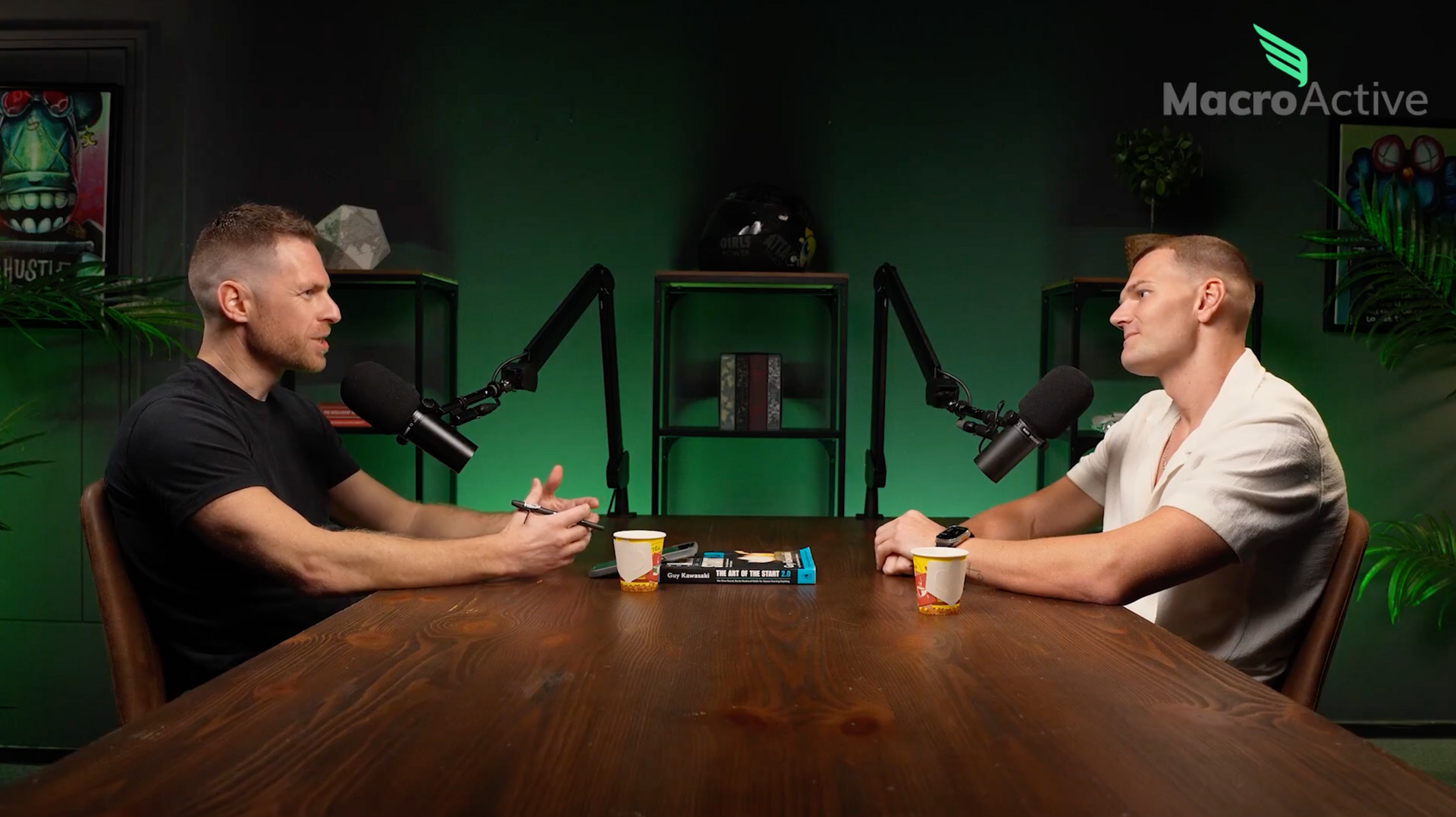
Zac Perna who has eight years of experience in social media and the fitness industry, began working with MacroActive at least 6 years ago. Zac now runs a seven-figure online coaching business, aims to deliver practical information on content creation and lead generation. His two promises for the video are to deliver more usable, practical information than the audience has likely seen elsewhere and to offer the opportunity to buy his product at some point, but only if he delivers on the first promise.
The video covers the "Attract, Convert, Deliver" model, focusing on personal brand and marketing strategies. Key takeaways the audience will leave with include:
- A content strategy and social media direction to eliminate uncertainty about what to post.
- The exact Call-to-Action (CTA) sequence that helped one trainer go from 7K to 20K a month in four weeks with 900 followers.
- Five tools to build a personal brand and stand out on social media.
- Three content pillars every fitness professional must use.
- The correct way to use AI like ChatGPT to increase content output tenfold and avoid common mistakes.
- The "blueprint content method" that helped a client named Orien achieve 60K months.
- The lead generation system Zac used to generate 300K in a single month and how to adapt it.
To help attendees, Zac offers a QR code to scan, providing the slides, over 100 done-for-you content ideas, a bonus confidence-on-camera workshop, a 30-day CTA calendar, and a one-on-one blueprint strategy call.
Zac discusses why people fail at content, citing inconsistency, not knowing what to post, and analysis paralysis as common reasons. To combat these issues, he outlines five key principles for personal branding:
- Talk to them: Imagine talking to the person you are completely yourself with, like a partner or friend, when filming content.
- Don't give a s***: Do not worry about what others think of your personality, as originality is key to success.
- Embrace what's there: You already have everything you need to stand out; embrace your current personality and stop resisting letting it out.
- Script yourself: Scripting correctly is crucial for a strong personal brand, preventing you from making "the same garbage everyone else makes".
- Real is refreshing: Being different and true to yourself will make your personality stand out.
Zac provides a structured workflow for content consistency:
- Decide your frequency: Aim for three to five posts per week if starting out, or seven if more advanced.
- Create the plan: Content creation involves ideation, scripting, shooting, editing, and posting, which must be done in this sequence. A bad idea cannot be fixed by a good script, a bad script cannot be fixed by a cool video, and bad shots cannot be fixed in editing.
- Ideation using three content pillars:
- Value: Informative or entertaining content that adds value to the audience.
- Proof: Content demonstrating credibility, such as client wins or testimonials, to show you are good at what you do.
- Personal: Anything personal to you, often involving documentation like vlogs or day-in-the-life videos.
- Combining these builds credibility (Value + Proof), affinity (Value + Personal), and trust (Personal + Proof), which increases the likelihood of a sale.
- Ideation using AI: Use ChatGPT as a research assistant to generate 30 problems your target audience faces, then turn those problems into reel ideas yourself. Do not trust ChatGPT for the end result, as it acts as a "text predictor on steroids" rather than scanning the web for up-to-date social media insights.
- Batch Planning and Shooting: Schedule time for planning (ideally in the morning) and batch record everything to ensure efficiency. The plan should be so detailed (scripting with deadlines) that you can turn up and shoot immediately.
- Scripting with the Line-by-Line Method: Write your script in your own words, using short, punchy lines that stack value quickly. One sentence should equal one idea, which may be one cut, edit, pop, or B-roll.
The video then delves into hooks (to get attention), which should be clear, bold, emotionally curious, fast (under three seconds), relevant, and simple to grasp. Three main types of hooks are:
- Doing something (Visual hook): Holding a prop or being in the middle of an action to spark curiosity.
- Saying something (Audible hook): The dialogue or line itself.
- Typing something (Text-based hook): Text on screen as you speak.
Specific hook categories include:
- Problem hook: Exposing a pain point the audience is experiencing.
- Promise hook: Making a specific, achievable claim, such as "This one tip will double your recovery in 24 hours".
- Proof hook: Showing evidence or social proof, such as "Here's how my client lost 10 kilos of fat without cutting carbs".
- Negative hook: Saying something controversial or negative, like "Eating clean is why you keep binging".
- Shock hook: Using something unexpected, funny, or extreme, such as "I ate 3,000 calories of peanut butter in one night and still lost fat".
Zac emphasizes that attention is currency and encourages moving that attention into a conversation because people often fail to convert by simply clicking a link in a bio. He identifies five types of stories for lead generation:
- Daily activities/documenting.
- Client wins/credibility.
- Bite-sized value.
- Call to actions (which should only be posted three times weekly and not exclusively).
- Talking head (where you confidently sell your service).
Finally, Zac strongly advises the audience to market their product more, cleverly and smartly, and not to rely on customers naturally wanting to buy.